|
TL;DR - Key takeaways:
|
Paid ads. Media coverage. Social platforms. Newsrooms. Blogs. Campaign pages…PR teams have more channels than ever.
The channels themselves have not changed much. What has changed is how people discover your content and who controls the narrative along the way.
In 2026, journalists still publish stories. Brands still run campaigns. Audiences still scroll feeds and Google answers. But AI systems and GEO now sit between your content and your audience. Summaries replace clicks. Snippets replace full articles. And context gets compressed fast.
That makes one thing clear: If your story does not live clearly in your owned channels, someone else will tell it for you.
This guide breaks down paid, earned, and owned media in easy-to-understand terms. You’ll see how they work, where each falls short, and why modern PR teams increasingly build their strategy around owned media first.
Understanding paid vs earned vs owned media
Let’s start with the basics...

What is paid media?
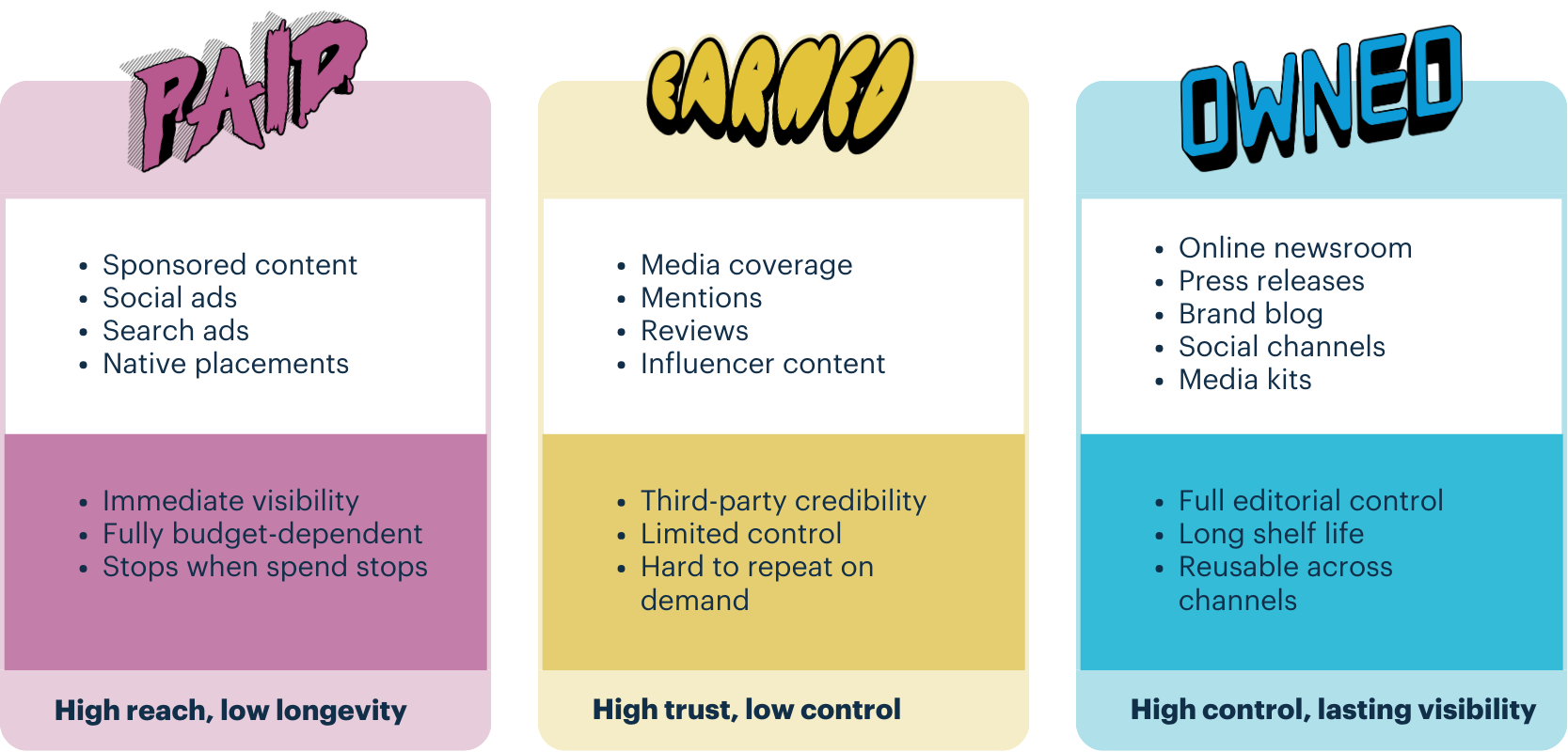
Paid media is visibility you buy.
You pay for placement, reach, or impressions across digital and traditional channels.
Examples of paid media
- Social media advertising
- Search ads
- Sponsored articles
- Display banners
- Native placements
- Paid influencer collabs
Anything with an invoice attached belongs here.
Pros & cons of paid media
Pros
- Fast exposure
- Predictable reach
- Easy to scale short-term
Cons
- Fully dependent on the budget
- Stops the moment your spend does
- Low trust compared to editorial sources
That imbalance explains why many teams feel stuck on a treadmill. Paid media delivers attention, but it rarely builds lasting visibility.
Digital trends reinforce this. Social and search now account for more than half of global advertising spend, showing just how dominant paid channels have become within online media.
Paid media works best as an accelerator. It is not a foundation.

What is earned media?
Earned media is coverage you do not pay for directly.
It comes from journalists, creators, customers, and third parties who choose to talk about your brand.
Examples of earned media
- Press coverage
- Product reviews
- Mentions in articles
- Influencer content
- Customer testimonials
Earned media carries credibility because it comes from outside your organisation.
Pros & cons of earned media
Pros
- Builds trust
- Reaches new audiences
- Adds third-party validation
Cons
- Little to no editorial control
- Timing is unpredictable
- Stories can lose nuance
- Hard to reproduce consistently
Earned media is powerful when it lands. But you do not control how your message is framed, quoted, or summarised. And in AI-driven discovery, that lack of control becomes even more visible.
Many PR frameworks (like PESO: Paid, Earned, Shared, Owned) stress that strong campaigns combine all channels deliberately. Earned media adds authority. Paid adds scale.
But owned? That holds everything together…

What is owned media?
Owned media is everything you publish and manage yourself.
It lives on platforms you control and can update at any time.
Examples of owned media
- Online newsroom
- Press releases
- Brand blog
- Media kits
- Corporate website
- Social profiles
Owned media is where your official story lives.
It is also where journalists, stakeholders, customers, and increasingly AI systems go to verify information.
That means your newsroom, website, and social channels now function as a living reference library for your organisation.
Pros & cons of owned media
Pros
- Full editorial control
- Long shelf life
- Reusable across paid and earned
- Central source of truth
Cons
- Requires internal discipline
- Needs structure to perform
- Takes time to build authority
Unlike paid or earned, owned media compounds. A press release published today on an authoritative brand newsroom can still inform journalists, customers, and AI systems months from now.
This is where modern PR teams regain control.
Using paid, earned, and owned media in a modern PR workflow
Here’s how this plays out IRL.
Scenario: Supply-chain Issue Response
Imagine this:
A logistics company detects a supply chain disruption affecting their European customers.
The communications team needs to respond fast.
First move: owned media
They publish an official statement in their online newsroom:
- Clear explanation of the issue
- What customers should expect
- Actions being taken
- Contact details for press inquiries
This becomes the source of truth.
Second move: earned media
Journalists receive the update and start covering the story. Some quote the newsroom directly. Others summarise it.
Because the original statement lives in a structured newsroom, reporters have a reliable reference point. Local teams adapt the message for regional audiences.
Third move: paid media
The company boosts visibility with targeted ads directing affected customers to the newsroom update.
Paid does not replace the statement. It drives traffic to it.
Now notice the flow:
- Owned hosts the story.
- Earned spreads it.
- Paid extends reach.
If you flip that order, things break.
Without owned media at the centre, coverage fragments. Ads point to landing pages built in a rush. Different regions publish different versions. AI tools pull partial context from third-party sources.
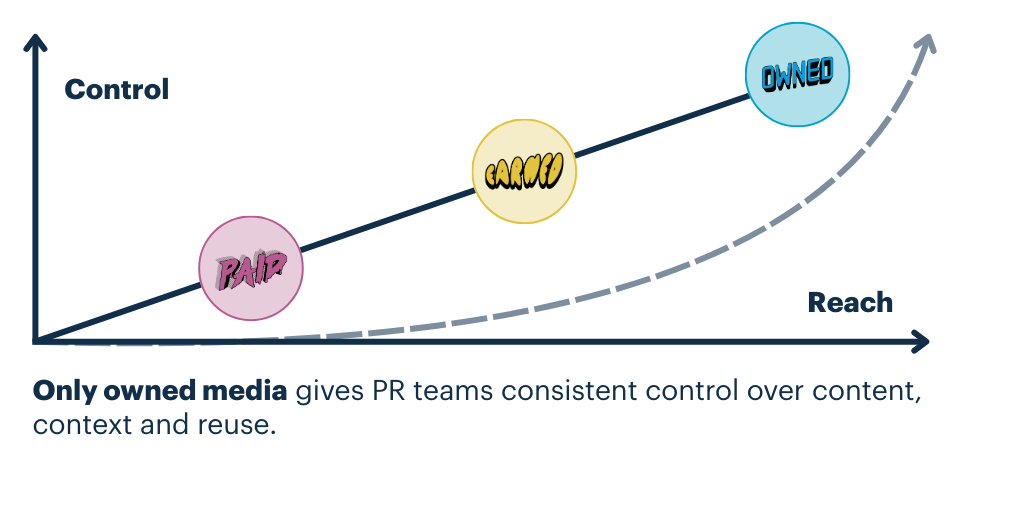
When done right, owned media keeps everything anchored.
FAQ about paid, earned and owned media in 2026
What is paid media?
Paid media is visibility you buy. You pay for placement, reach, or impressions across digital and traditional channels.
Examples of paid media include: social media advertising, search ads, sponsored articles, display banners, native placements, and paid influencer colabs.
Paid media works best as an accelerator. It is not a foundation.
What is earned media?
Earned media is coverage you do not pay for directly. It comes from journalists, creators, customers, and third parties who choose to talk about your brand.
Examples of earned media include: press coverage, product reviews, mentions in articles, influencer content, and customer testimonials.
Earned media adds authority to your PR strategy.
What is owned media?
Owned media is everything you publish and manage yourself. It lives on platforms you control and can update at any time.
Examples of owned media include: online newsrooms, press releases, brand blogs, media kits, corporate websites and social media profiles.
Unlike paid or earned, owned media compounds. A press release published today on an authoritative brand newsroom can still drive engagement.
The wrap: Building a media mix where owned takes the lead
Paid, earned, and owned media each play a role.
- Paid buys attention.
- Earned builds credibility.
- Owned gives you control.
In 2026, control matters - maybe more than ever.
AI systems summarise your announcements. Social platforms surface snippets instead of links. Journalists move fast. Audiences scan headlines.
The only place you can fully manage context, accuracy, and reuse is your owned media.
That is why modern PR teams build outward from their newsroom.
They publish once. Adapt globally. Reuse across channels. Measure performance. And feed journalists and AI systems from the same trusted source.
The smartest strategy blends all three. But owned leads the charge.
Is your newsroom ready to lead the owned media charge? If not, this guide will help: