Brand Governance Software Feature

Content Risk Flagging

Catch risky content while it’s still in draft

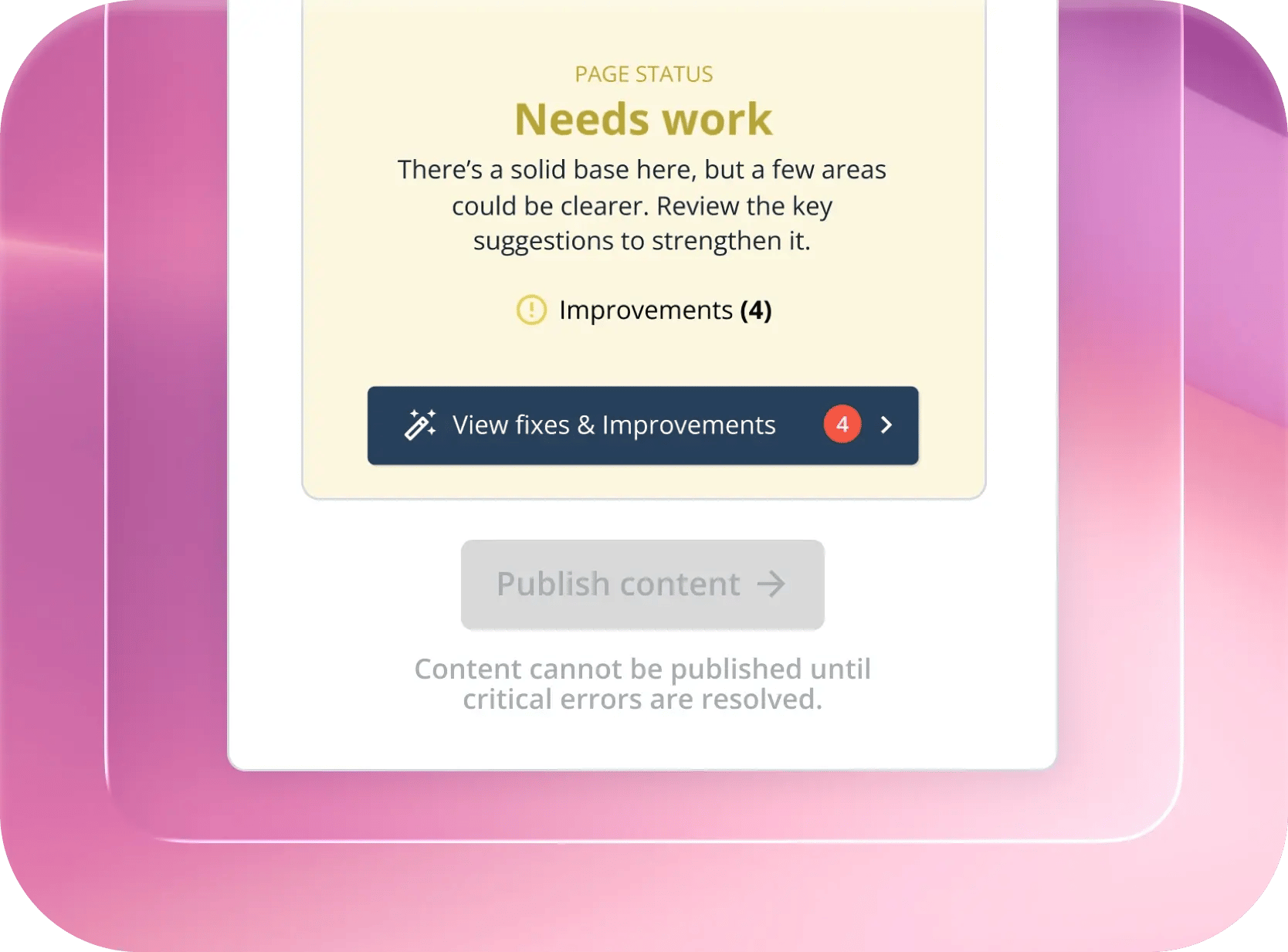
Flag off-brand, inaccurate, or potentially risky claims and language before publication, while there’s still time to fix them.
Content Approval - Hero

Icon-Pink-Check

Flag issues before go-live

Identify language, claims, or terminology that could create brand, reputational, or compliance risk while content can still be changed.

Icon-Pink-Check

Check against your guardrails

Compare drafts with your approved messaging and risk standards instead of relying on every reviewer to spot the same issues manually.

Icon-Pink-Check

See what needs attention

Surface questionable claims, wording, or terminology clearly so teams know exactly what to investigate or correct before publishing.
What is Content Risk Flagging and how does it work?

Content risk is easier to manage when potential problems are caught before something reaches an audience.

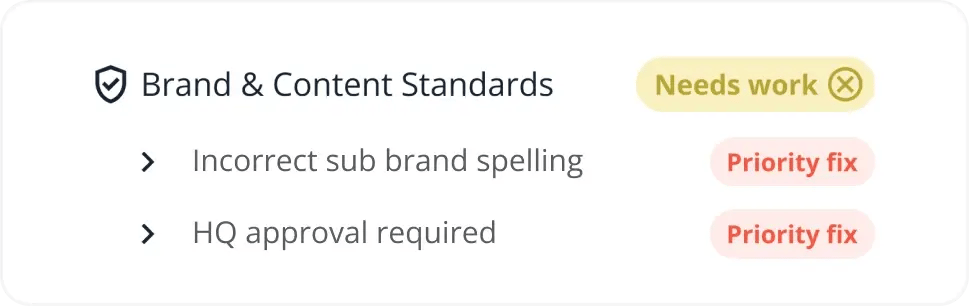
Presspage’s Content Risk Flagging checks drafts against your approved messaging, terminology, and risk guardrails, helping teams spot claims or wording that may need further review before publication.

That could mean an inaccurate statement, inconsistent brand language, or wording that creates unnecessary reputational or legal risk. Instead of asking every piece of content to go through the same level of scrutiny, Presspage helps surface the parts that deserve closer attention.

That gives communications teams an earlier warning system for content risk. Instead of discovering a questionable claim or piece of wording after publication, teams can investigate it while the content is still in draft and decide what needs to change.

Content approval - Pop_no-shadow

Let legal review the hurdles, not every little bump

Sending every draft through the same risk review is one way to stay cautious. It is also a good way to slow the whole team down.

Content Risk Flagging helps identify the claims, wording, and terminology that actually need a second look, so specialist reviewers can focus their attention on the bigger picture.

Lufthansa Customer Logo 95

"Lorem ipsum dolor sit amet, consectetur adipiscing elit, sed do eiusmod tempor incididunt ut labore et dolore magna aliqua. Ut enim ad minim veniam, quis nostrud."

Name
Position
Company

Lorem ipsum dolor sit amet, consectetur adipiscing elit, sed do eiusmod tempor incididunt ut labore et dolore magna aliqua. Ut enim ad minim veniam, quis nostrud exercitation ullamco laboris nisi ut aliquip ex ea commodo consequat.

Duis aute irure dolor in reprehenderit in voluptate velit esse cillum dolore eu fugiat nulla pariatur.

Excepteur sint occaecat cupidatat non proident, sunt in culpa qui officia deserunt mollit anim id est laborum.

Lorem ipsum dolor sit amet, consectetur adipiscing elit, sed do eiusmod tempor incididunt ut labore et dolore magna aliqua. Ut enim ad minim veniam, quis nostrud exercitation ullamco laboris nisi ut aliquip ex ea commodo consequat.

Excepteur sint occaecat cupidatat non proident, sunt in culpa qui officia deserunt mollit anim id est laborum.

Content Risk Flagging FAQ.

What is a brand risk?
A brand risk is anything in your communications that could damage trust, create confusion, or expose the organisation to unnecessary reputational or legal risk. That might be an inaccurate claim, inconsistent messaging, or wording that could be interpreted differently than intended.
How do I assess AI risk in published content?

Assessing content risk means checking a draft for claims, terminology, or language that could create reputational, compliance, or brand issues. Presspage compares content against your approved messaging and risk guardrails, then flags anything that may need further review before publication.

How do I limit brand safety risk?

Reducing brand safety risk starts with catching potential issues while content can still be changed. Presspage’s Content Risk Flagging solution brings those checks into the creation process, helping teams resolve questionable claims, terminology, or messaging before they reach an audience.


Catch risky content before it goes live

Flag questionable claims, terminology, and messaging while there’s still time to investigate and fix them.